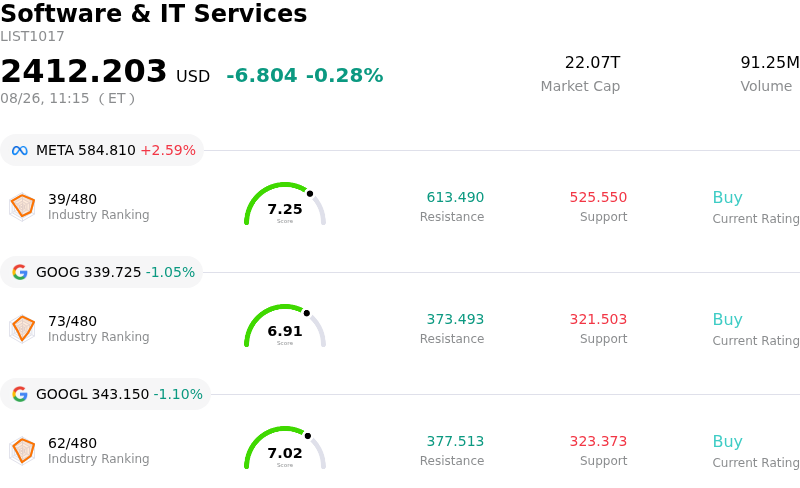
SAP SE (SAP) moved down by 3.44%. The Software & IT Services sector is down by 0.28%. The company underperformed the industry. Top 3 stocks by turnover in the sector: Meta Platforms Inc (META) up 2.59%; Alphabet Inc Class C (GOOG) down 1.05%; Alphabet Inc Class A (GOOGL) down 1.06%.
What is driving SAP SE (SAP)’s stock price down today?
The downward movement in SAP SE stock during the session is primarily driven by a high-profile analyst downgrade from UBS, which lowered its rating on the enterprise software giant from Buy to Neutral. The rating cut triggered profit-taking following a multi-week rebound in the shares. Wall Street highlighted concerns regarding the company's relatively sluggish rollout of agentic artificial intelligence tools into customer workflows, which could restrain near-term monetization opportunities and increase the risk of enterprise clients pursuing alternative AI solutions outside of SAP's core ecosystem.
In addition to the AI deployment pace, market sentiment was dampened by expectations of a growth deceleration in SAP's current cloud backlog during the second half of the year. While the company maintains strong core enterprise resource planning capabilities and ongoing customer migrations through its specialized cloud transition programs, analysts noted that free cash flow upside against management guidance appears increasingly constrained, impacted in part by the utilization of customer migration credits. Although long-term structural demand remains supportive, institutional focus has temporarily shifted toward execution risks surrounding AI feature rollouts and cloud order momentum.
From a broader perspective, the pullback reflects growing investor impatience across the enterprise software sector regarding the tangible commercialization of generative AI offerings. As competition from enterprise cloud peers intensifies, market participants are demanding clear evidence of accelerated contract values and direct AI-driven revenue contributions. This heightened sensitivity to operational execution, combined with profit-taking after the stock's recent recovery, generated sustained selling pressure and intraday volatility.
Technical Analysis of SAP SE (SAP)
Technically, SAP SE (SAP) shows a MACD (12,26,9) value of -1.108, indicating a neutral signal. The RSI at 62.129 suggests neutral condition and the Williams %R at 56.391 suggests sell condition. Please monitor closely.
Fundamental Analysis of SAP SE (SAP)
SAP SE (SAP) is in the Software & IT Services industry. Its latest annual revenue is $41.49B, ranking 14 in the industry. The net profit is $8.07B, ranking 13 in the industry. Company Profile
Over the past month, multiple analysts have rated the company as Buy, with an average price target of $253.74, a high of $367.98, and a low of $154.99.
More details about SAP SE (SAP)
Company Specific Risks:
- Execution Lag in Agentic AI Rollout and Monetization: Wall Street downgrades underscored that SAP has made only 17 out-of-the-box AI agents generally available against its full-year target of 200. This delayed rollout limits near-term AI monetization and increases the operational risk of enterprise clients turning to rival platforms or DIY AI tools.
- Expected Cloud Backlog Deceleration and FCF Constraints: Analyst projections indicate a likely slowdown in current cloud backlog growth in the second half of fiscal 2026. In addition, heavy customer utilization of migration credits under the RISE initiative is weighing on free cash flow generation, reducing the likelihood of FCF upside relative to targets.
- Acquisition Dilution and AI Cost-Driven Margin Compression: Management trimmed its fiscal 2026 operating profit guidance by €100 million to reflect dilution from recent AI-related acquisitions, including Dremio and Prior Labs. Profitability is further constrained by higher AI token infrastructure expenditures and elevated R&D costs, leading to pressure on cloud gross margins.
- Regulatory Concessions Weakening Contract Lock-in: Legally binding commitments signed with European antitrust regulators require SAP to eliminate reinstatement fees and allow contract exit clauses globally. These mandatory concessions lower switching barriers for software clients, compressing high-margin maintenance revenues and impairing long-term revenue predictability.
Find out more